
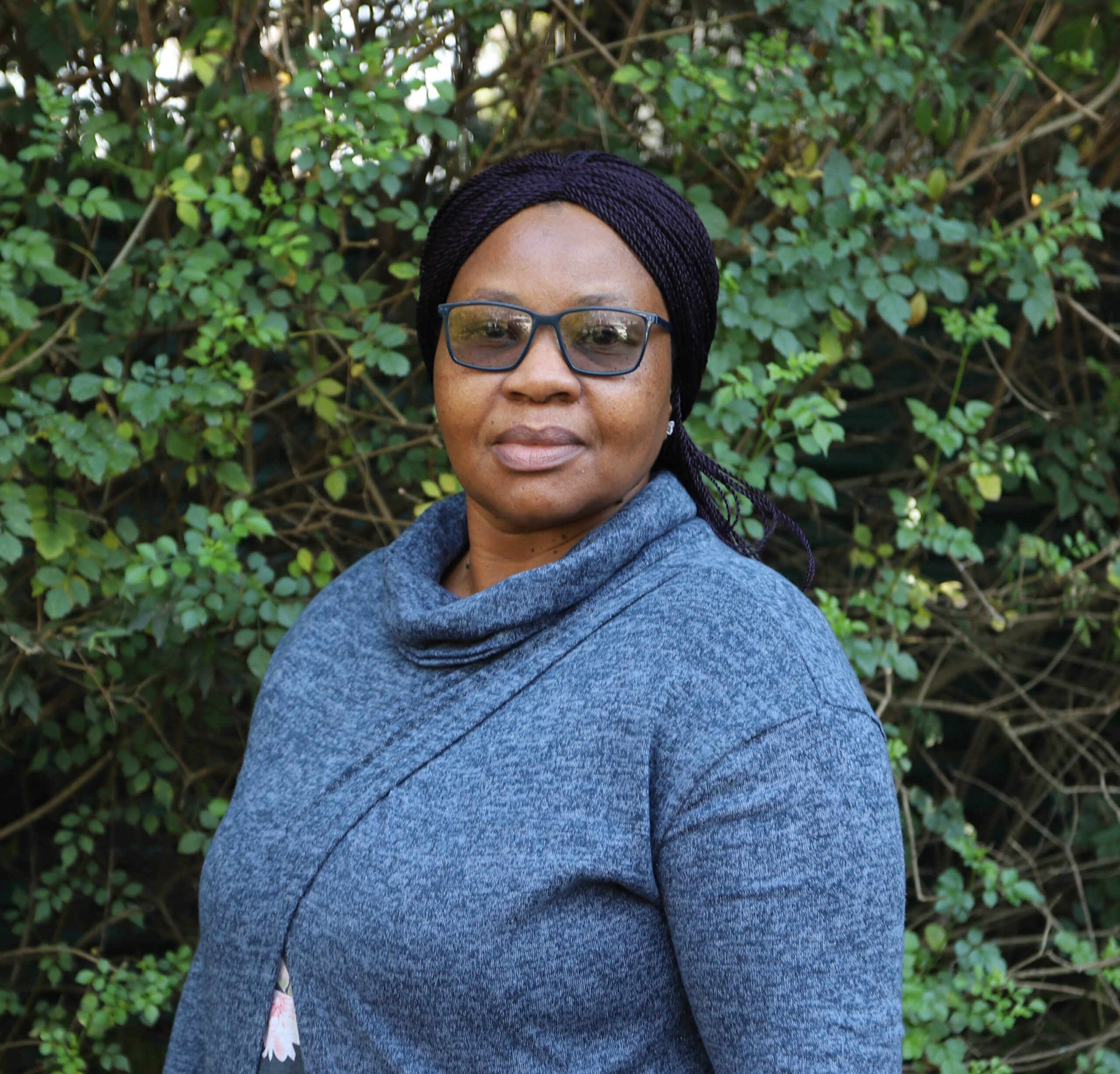
In every good epic adventure story, there’s a reluctant hero asked to abandon what they know and embark on a quest that usually involves cleaning up civilisation’s big mess or solving a potentially catastrophic crisis.
When I sat down to interview SaveAct Programme Manager, Nolufefe Nonjeke-Dlanjwa, her first question was, “What is this for?” And she seemed genuinely confused as to why she drew the short straw of having to chat to me.
Success. In terms of my handy archetype guide, I had a big tick on the reluctance front, and this boded well for my hot pursuit of a “Heroes Quest”.
I explained the purpose of the article and the newsworthiness of her long history with SaveAct, alongside some typical Women’s Month jargon. And then, shortly after, I had the awkward moment of facing up to my opening question…
“Who or what inspires you?”
It’s hardly Pulitzer Prize-winning, is it? And, trust me, as someone who has taught feature writing and the “art of the interview” for over a decade, it’s this type of lazy ice-breaker that only ever produces misty-eyed, “Nelson Mandela,” “My granny/mother,” “Gandhi,” or “Greta Thornberg, Thunderbird, Thunbig is it?”
But, fortunately, as it turns out, even the most award-winningly generic questions can provide surprises when posed to the right person.
For Nolufefe Nonjeke-Dlanjwa, inspiration is about paying attention and really seeing things. “What inspires me is not always an easy one. However, there are, I think, a thread of things that connect on our paths.” And connection is an important principle for Dlanjwa, who came from a background that wasn’t well-resourced. As a young girl who grew up in these circumstances, she taught herself to look at life differently so that she could aspire to make things better—for herself, her family, her siblings… For her community.
Community, connection, and her acute sense of observation and problem-solving seem to be the source of her drive. She explains, “If you see people making lives out of almost nothing, you see how people can rise above circumstances and still persevere.” She acknowledges that for many South Africans, life is incredibly tough. There are scarce resources, limited opportunities, and, importantly, very limited role models.
However, out of these circumstances, she sees the potential for connection as a way to facilitate change, and this is where she observes the tenacious power within rural South Africa. She explains how “It’s always a struggle to reach milestones. But I’m also inspired by how people remain humble, content, and strong. Compared to what you’re seeing in urban centres. In a rural context, there’s more stability and predictability.” She sees this as an important lesson for the youth who have exposure to opportunities, but often, they “don’t see or tap into assets that surround them.”
This is where support and community are so important. As someone who grew up with limited opportunities and with so few platforms to inspire, the young girl in Dlanjwa wants to make choices that others can look up to, and to encourage people to see opportunities, however small they may be.
One of the key choices Dlanjwa made turned out to be the happy accident of applying for a job at SaveAct in 2008. Initially, she didn’t know much about the organisation and was just on a job hunt, but when she got the job, she found something that resonated and connected deeply with her life. She’s a woman intent on being part of a broader change and explains, “I grew up being a person who wants to stand out, not because I had brains, but because I had the means to believe it is possible.” And, she continues to drive the SaveAct agenda, not because it’s her job, but because, “I see savings groups as a way to move closer towards social communal values that have been eroded,” and “regardless of who you are and what your conditions are, you always have something that you aspire to… And sometimes what cripples people is a sense of helplessness.”
Through the numerous conversations she has with women and savings group members, Dlanjwa tries to demystify the savings process. She believes that at its core, it’s not just about economic savings—it’s more of a livelihood pathway programme that involves self-reflection and being introspective about what’s going on in your life and what’s really important.
And in a world of consumerism, conspicuous consumption, fast fashion, instant gratification, and influencer culture, Dlanjwa reiterates that material things are not what connect us to who we are. She wants to mobilise the community mentality and shift it away from the individualistic. She sees a massive challenge in looking at cost-effective means to reach as many people as possible to change how we see, view, and use money. Because, as she points out, there’s something very wrong with our socio-economic values around how we live.
Dlanjwa has seen the deep impact of savings groups since 2008. She says there’s an initial hesitance and mistrust (unsurprising given the landscape of “easy money”, loans, etc.), but the savings group members influence each other and show how we can shift our priorities around money and value. And through this, people become more intentional about using money towards things that are productive.
“What I’m always proud of is that very soon into our programme, people can make the distinction between other savings initiatives and what SaveAct offers. The momentum grows through proof.”
And although Dlanjwa may be a reluctant hero in terms of how she wants people to perceive her, she does see the role she needs to play. “We need to be thinking about strategies that talk to people at different levels. There’s a long way to go in terms of working on solutions that lift up the marginalised. I feel like a lot of efforts fit into an ugly system. This system pushes people away from making vital contributions because of the structural issues.”
There’s a lot that can be turned around to create opportunities; however, many of these interventions don’t address long-term sustainability and are often a form of window dressing. We need to solve how the youth enter the economic market so that they are not just working and living to service debt. This one intervention alone would create a culture of discipline around savings, sustainability, and value that would make a massive change.
And although the face of poverty is still very much the burden for women to carry, we can all be intentional about women-inclusive solutions. For this reason, Nonjeke-Dlanjwa views SaveAct’s audacious goal of reaching 2 million women by 2035 as something that everyone should get behind and make their mission. It’s time for all of us to shed our reluctance and see the connections that can provide sustainable opportunities.