
SaveAct has been working in financial education, savings methodology, and livelihood pathways for 20 years. Over that time, the organisation has extended its reach to over 110,000 people—with plans to reach two million women and youth over the next 10 years.
Between November 2024 and February 2025, SaveAct—in partnership with the AIDS Foundation South Africa (AFSA) and supported by Choice Trust, Ubunye Foundation, Fiinafas, and Real Consulting—conducted Life Skills Training (LST) and Financial Education (FE) with sex workers. The programme worked with sex workers in six provinces – the Eastern Cape, KwaZulu-Natal, Gauteng, Northern Cape, Northwest and Limpopo.
In a country where nearly 36% of women are unemployed (https://www.statssa.gov.za/publications/P0211/Media%20Release%20QLFS%20Q2%202025.pdf), sex work is a viable option for many. This is due to economic necessity or to the responsibilities associated with care and kin work—many women support children, extended families, and/or dependents. Many women also lack the necessary skills and education, which limits their choices to domestic work, caregiving, entry-level hospitality jobs, retail, and basic administration—jobs that aren’t typically well paid. Furthermore, for women who are discriminated against, particularly undocumented migrants and the LGBTQ+ community, sex work is often one of the few ways of earning an income.
However, it’s not purely economic. It’s important to note that while sex work is often framed around narratives and discourses of “desperation”, it’s more complex. Sex work can offer flexible working hours, agency, and control, and for many, sex work is a way to escape abusive or controlling circumstances and relationships. For many, sex work is a blend of survival, strategy, and agency in that it allows for choices in an unequal economy that doesn’t provide many alternatives.
Yet, selling and buying sex remains illegal under South African law despite legal challenges, most notably by the NPO SWEAT (Sex Workers Education and Advocacy Taskforce).
The criminalisation of sex work doesn’t eradicate it; it simply sweeps it under the rug and increases the vulnerability of sex workers. According to a report, Female and Transwomxn Sex Worker Deaths in South Africa (https://sweat.org.za/wp-content/uploads/2024/09/Sweat-2020-Say-Her-Name_final-low-res-1.pdf), it is estimated that 45% of sex workers who died in 2018-2019 were murdered. The fact that sex work is criminalised means that sex workers face additional stigma and often are denied or have obstructed access to health services and HIV prevention interventions.
Marginalised and vulnerable groups are all too frequently left out of public discourse. A step towards empowerment and agency is recognising that sex work is work and should come with rights, safe working conditions, fair pay, etc. Furthermore, we should recognise the parallels with other women’s economic struggles and include sex workers in broader conversations around gender equality.
SaveAct and its partners were contracted to reach 600 sex workers with LST and FE by conducting face-to-face training with groups of approximately 20 participants. The training was facilitated by experienced trainers who used specially developed training content applicable to the context of sex work.
The purpose and objectives of the LST and FE programmes were:
- To enhance participants’ self-awareness
- To strengthen financial literacy
- To build life planning skills
- To address the unique challenges faced by sex workers, including stigma, substance abuse, and economic vulnerability
SaveAct analysed the socioeconomic environments within which sex worker participants (SWP) live to provide context for the capacity development processes. The aim was to support SWPs with choices and opportunities to broaden or diversify potential income streams.
The LST (Life Skills Training) Programme
The four-day LST programme was conducted in the Eastern Cape, Free State, Gauteng, KwaZulu-Natal, Limpopo, Northern Cape and Northwest during November 2024 and January 2025. The total attendance was 588 out of a target of 600, with 20 participants in each group (predominantly women and a few transgender participants).
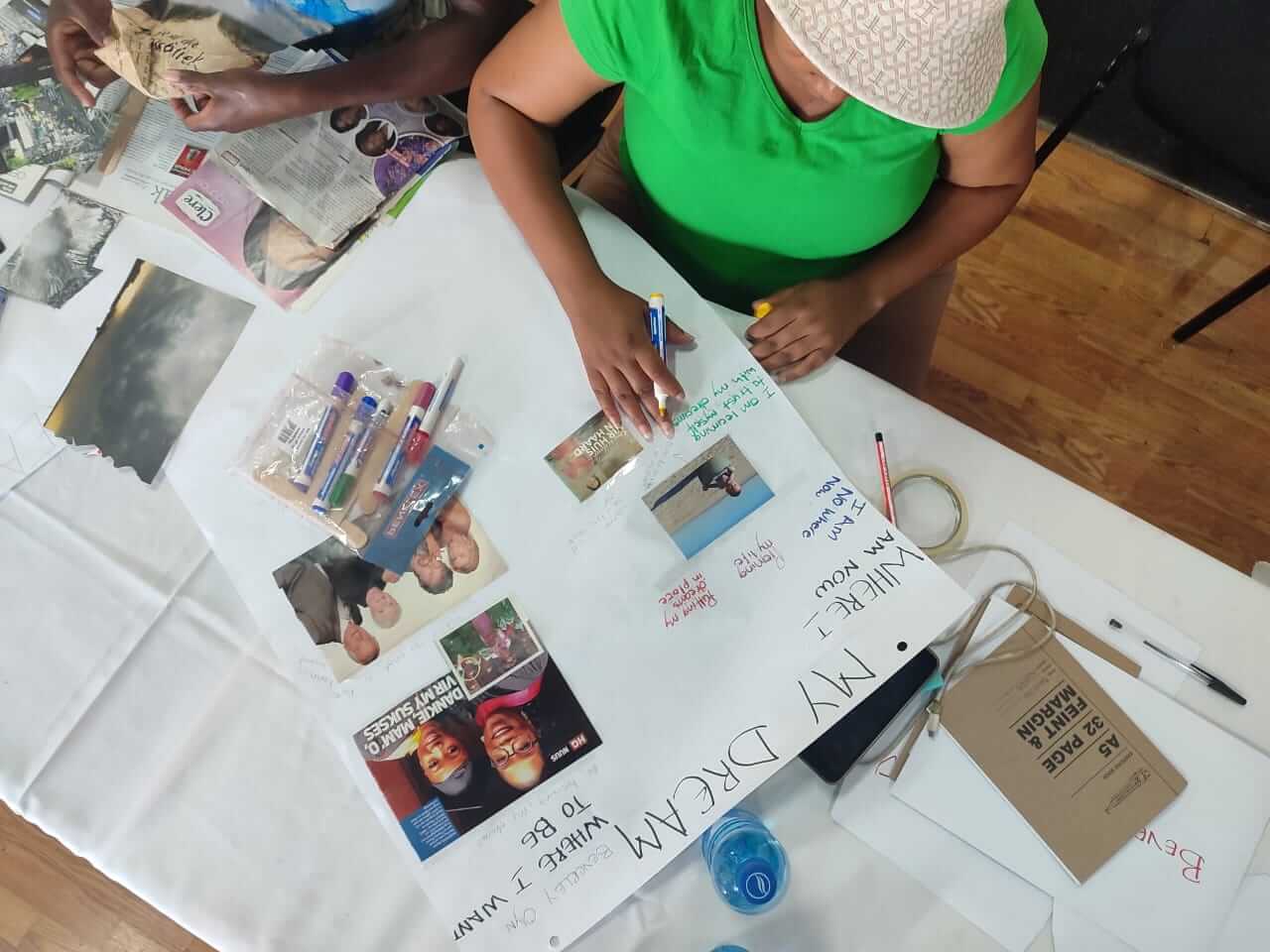
The focus of the LST programme was to develop a supportive environment through active participation to empower participants through self-awareness, goal setting, and community engagement. The use of roleplays, group discussions, and reflective exercises fostered a supportive learning environment with a focus on personal development. Through real-life scenarios, participants learned about life planning, goal setting, and how to face challenges.
The key outcomes from the programme;
- Increased self-awareness and self-esteem
- Development of life planning and goal-setting skills
- Enhanced understanding of physical and mental health, self-care, and wellness
- Improved social skills and community engagement
- Self-discovery and motivation
- Increased recognition of self-image and personal strengths
- Goal-setting
- Improved communication, problem-solving, and decision-making
The overall response from the LST programme was very positive. Participants expressed gratitude and recognised being treated with a level of respect they had never before encountered. The programme revealed that personal stories inspire and motivate individuals to overcome challenges as well as encourage empathy and understanding. For vulnerable groups such as sex workers, LST helps them identify and mitigate risks, negotiate safer working conditions, and access essential services. This leads to empowerment and self-confidence as well as the creation of supportive environments to address the stigma associated with vulnerable groups.
A sub-grantee recipient facilitator commented that participants were inspired “to have reasons of their own to change for better”. A professional social worker from the Humana PTP said that, “The training is very relevant to the group as it helped the participants to reflect on their own life situations and were able to identify unresolved matters and were willing to discuss them with the Social Worker”.
The FE (Financial Education) Programme
The financial education (FE) curriculum was run over two consecutive days. The programme implemented SaveAct’s widely tested core tools, with some adaptations to account for the social profile of the participants.
The FE sessions were conducted for 468 participants during January and February 2025 and targeted participants from the previous LST. The training aimed to help sex worker participants understand their skills, capabilities, and strengths and provide them with the knowledge and tools to manage their finances. The aim was to enhance their understanding of their financial situation alongside what they learned from the LST programme.
The key outcomes from the programme:
- Long-term financial planning
- Budgeting
- Understanding needs vs wants
- Income and expense tracking
- Exploring income-generating opportunities and saving options
The training increased understanding of financial planning, budgeting, and saving. And, more than that, it helped them to recognise the importance of making financial decisions alongside life plans. Many participants expressed a change in attitude towards money management habits and expressed a willingness to adopt budgeting practices.
They expressed that the training improved their outlook on life and built upon the knowledge gained in the LST. Participants shared their dreams and aspirations and expressed an improved understanding of financial situations and money management. During the FE sessions, there was a noticeable shift in participant sentiment from doubt to positivity—an indication of the training’s efficacy to empower offer control.
The Life Skills Training (LST) and Financial Education (FE) programmes demonstrated the significant value of savings groups and how they directly impact agency and empowerment. And with the right follow-up support, mentorship, and continued access to skills, these programmes can have a sustainable impact that directly improves the lives of women.